

Bathroom vs. Kitchen Remodel ROI: Westchester & Putnam NY
- Rokonline
- August 30, 2026
-
- 0
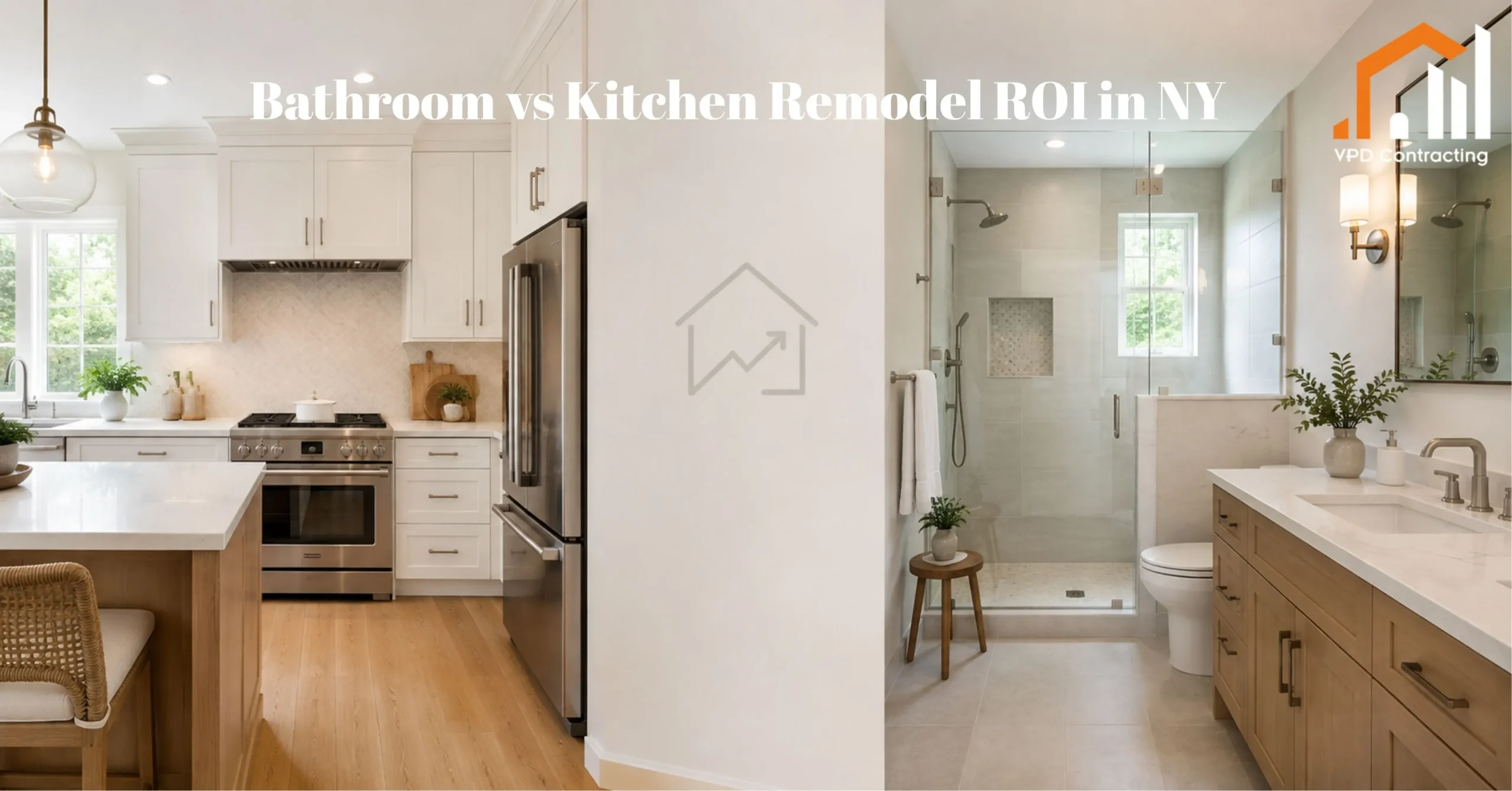
If you’ve got one renovation budget and two rooms staring you down, here’s the short answer: a midrange bathroom remodel typically recoups a higher percentage of its cost than a full kitchen overhaul, but a minor kitchen refresh often outperforms both. The room that wins for you depends less on a national percentage and more on which space is dragging your home down compared to what buyers in Westchester and Putnam County expect to see.
That’s not a dodge. It’s how the numbers actually work, and we’ll walk through exactly why below.
What Is Remodel ROI, Exactly?
Remodel ROI is the percentage of your renovation cost that you get back in added home value when you sell. If you spend $20,000 on a bathroom and it adds $16,000 to your sale price, that’s an 80% ROI. It’s not the same as did I love using this room for the years I lived here, and it’s not a guarantee; it’s a resale-focused estimate based on what similar homes with similar upgrades have sold for.
The most widely cited source for these figures is the annual Cost vs. Value Report, published by Zonda in partnership with Remodeling and Journal of Light Construction. It surveys real estate professionals and contractors nationwide, then breaks results down by project type and region.
Kitchen vs. Bathroom ROI: The Numbers
Here’s where things get interesting, because kitchen and bathroom aren’t single categories. Scope changes everything.
Project Type | Typical National ROI | What’s Included |
Minor kitchen remodel | 70–95%+ | Cabinet refacing, new countertops, updated appliances, hardware, backsplash — existing layout kept |
Major kitchen remodel | 45–55% | Layout changes, custom cabinetry, high-end appliances, structural work |
Midrange bathroom remodel | 70–80% | New vanity, tile, fixtures, updated lighting — existing footprint kept |
Upscale bathroom remodel | 35–50% | Custom tile, frameless glass, heated floors, layout changes |
Recent industry data puts national midrange bathroom ROI at roughly 74–80%, its strongest showing since 2007. Minor kitchen remodels have consistently ranked as the single best-performing interior project in the report, in some years crossing 100% recouped, while major kitchen remodels, the kind that move walls and add square footage, tend to land closer to 50%.
The pattern holds across nearly every source we reviewed: the smaller, more targeted the project, the better it performs. A gut renovation feels more dramatic, but it’s the incremental, high-visibility upgrade that pays you back.
Why New York Homeowners See Different Numbers
National averages are a starting point, not a forecast for your street. The Mid-Atlantic region, which includes New York, typically runs a notch below the national leaders on interior remodel ROI; regions like the Pacific Northwest and parts of the South post higher percentages, partly because of how tight inventory is in those markets.
But Westchester and Putnam County have their own dynamics working in your favor. Westchester has been running as one of the tightest seller’s markets in the state, with homes moving in around a month and sellers routinely getting close to full asking price. Putnam has seen even faster turnover on some counts. In a market like that, a home that already shows well, has an updated kitchen, a clean bathroom, and no obvious next owner’s project has an edge that goes beyond the raw ROI percentage. Buyers competing for a limited number of listings are less forgiving of dated fixtures than buyers in a slower market would be.
That’s the piece a pure national ROI number can’t capture: in a tight local market, a well-scoped remodel doesn’t just recoup cost, it can shorten your time on market and reduce the odds of a buyer using your outdated bathroom as a negotiating chip.
So Which Should You Remodel First?
Run through these three questions before you touch either room.
1. Which room actually looks like a problem to a buyer?
A 1990s bathroom with a fiberglass tub surround and a cracked vanity top reads as deferred maintenance to a buyer, even if your kitchen is only slightly dated. If one room is visibly behind the other, fix the one that’s behind first. Buyers subtract more value for the worse room than they add for the better one.
2. How long are you staying?
If you’re selling within a year or two, prioritize the project with the best resale ROI for the smallest disruption; that’s almost always a minor kitchen refresh or a midrange bathroom update, not a gut job. If you’re staying five-plus years, weight your decision toward the room you use the most. A kitchen you cook in daily delivers a return you feel every day, even if the resale percentage is a few points lower than a bathroom project.
3. Can you keep the existing footprint?
This is the single biggest lever on ROI in either room. Moving plumbing lines, knocking down walls, or reconfiguring a layout adds cost fast without adding proportional resale value. Keeping the kitchen’s sink and range in place, or the bathroom’s tub and toilet on their existing lines, is usually what separates a 90% ROI project from a 50% one.
What a High-ROI Kitchen Project Looks Like
The Cost vs. Value data is consistent on this: refacing beats replacing when the existing cabinet boxes are square and sound. Swapping doors, drawer fronts, and hardware costs a fraction of full replacement and delivers most of the visual impact a buyer notices at a walkthrough. Pair that with a countertop upgrade, quartz is the safest resale bet across most NY markets right now, updated appliances, and a new backsplash, and you’ve hit the sweet spot the report consistently rewards.
What tends to erode ROI: moving the sink or range to a new wall, custom cabinetry built from scratch, and high-end appliance packages that outpace what comparable homes in your neighborhood are asking for. None of that is wasted money if you plan to live there for the next decade and love cooking; it’s just money you’re unlikely to fully recoup at resale.
What a High-ROI Bathroom Project Looks Like
Midrange work wins here too: a new vanity with a solid-surface or quartz top, updated tile, a new toilet, better lighting, and either a refreshed tub or a tub-to-shower conversion, all within the existing footprint. This tier consistently posts the strongest bathroom ROI in the national data because it eliminates the “this needs work” impression without the cost of moving plumbing.
Upscale finishes, natural stone, custom frameless glass, heated floors, and smart fixtures look fantastic and can be worth every penny if you’re staying long-term in a higher-end neighborhood where buyers expect that level of finish. In a more typical Westchester or Putnam starter-to-mid-range home, though, that spending tends to outpace what the next buyer will pay back.
Common Mistakes That Quietly Kill ROI
Over-improving for the block
A $90,000 kitchen in a neighborhood of $450,000 homes won’t sell for a $90,000 premium. Buyers compare your house to the others on the street, not to a magazine spread. Match the scope of your project to what similar homes nearby are asking for.
Skipping permits
Westchester and Putnam County both require permits for most electrical, plumbing, and structural work. Unpermitted renovations can complicate a sale, since buyers’ attorneys and inspectors routinely ask for permit records, and unpermitted work sometimes has to be opened back up or corrected before closing. It’s not just a compliance issue, it’s a resale-value issue.
Choosing trend over durability
Bold, of-the-moment finishes photograph well but can date a room faster than a timeless choice. Quartz counters, neutral tile, and classic cabinet profiles tend to hold their appeal, and their resale value, longer than whatever’s trending this season.
Moving plumbing while we're in there anyway
It’s tempting to relocate a sink or reconfigure a bathroom layout once the walls are open. Each move adds real cost for comparatively little resale return. If the existing layout works, keep it.
The Bottom Line
There isn’t a single winner between kitchens and bathrooms; there’s a winner for your house. Look at which room is furthest behind the rest of your home, keep the existing layout wherever possible, scope the project to match your neighborhood, and pull the right permits. Do that, and either room can be a smart investment, not just a nice-to-have.
If you’re trying to figure out which project makes the most sense for your specific home in Stormville, Carmel, Brewster, or anywhere else in Westchester or Putnam County, VPD Contracting offers a free consultation where we’ll walk the space with you and talk through real numbers, not generic percentages.
Frequently Asked Questions
Which remodel adds more value, kitchen or bathroom?
Percentage-wise, a minor kitchen remodel usually posts the highest ROI of any interior project, with midrange bathroom remodels close behind. But which adds more value for your specific house often comes down to which room is more visibly dated compared to the rest of the home; that room usually deserves priority regardless of the national percentages.
What's a good ROI for a kitchen remodel?
Anything in the 70–95% range is strong and typical for a well-scoped minor remodel that keeps the existing layout. A major remodel in the 45–55% range isn’t a bad investment; it just needs to be justified by how much you’ll use and enjoy the space, not resale math alone.
Should I remodel my kitchen or bathroom first?
If you only have one full bathroom, prioritize it; living through a kitchen renovation is inconvenient, but living without a working bathroom is genuinely difficult. If you have more than one bathroom, tackle whichever room is more outdated relative to the rest of your home, or the one you use most if you’re not selling soon.
Does a bathroom remodel increase home value in New York?
Yes. Midrange bathroom updates consistently rank among the stronger-performing interior projects nationally, and in a tight seller’s market like Westchester or Putnam County, a bathroom that shows well can also help a listing move faster.
Do permits affect remodel ROI in Westchester or Putnam County?
Yes. Both counties require permits for most structural, electrical, and plumbing work, and unpermitted renovations can create complications at resale. A licensed local contractor can tell you upfront what your specific project needs.