

How to Choose a Remodeling Contractor: A Homeowner’s Guide for Westchester & Putnam County, NY
- Vladimer
- August 8, 2026
-
- 0
There’s a particular look people get when you ask about their renovation. It’s not quite a wince, and it’s not quite pride; it’s somewhere in between, like they survived something. Ask a homeowner in Carmel or Cold Spring how their kitchen remodel went, and you’ll usually get one of two stories. Either the crew was in and out in six weeks, and I’d hire them again tomorrow, or a much longer story involving a contractor who vanished for three weeks in the middle of demo, a bathroom that sat gutted through a New York winter, and a lot of very unfun phone calls to a lawyer.
The wild part? Both homeowners probably had the same budget. The same Pinterest board. The same good intentions. The only real difference was who they hired.
Learning how to choose a remodeling contractor isn’t just a box to check before your project starts; it’s the single decision that determines whether your renovation feels like an upgrade to your life or a part-time job managing a crisis. This guide walks through exactly what to look for, what to avoid, and how homeowners across Westchester and Putnam County, Stormville, Carmel, Brewster, Cold Spring, Kent, Patterson, Mahopac, and beyond can hire with confidence instead of crossed fingers.
Why Choosing the Right Remodeling Contractor Matters More Than You Think
A renovation isn’t really about tile or cabinetry. It’s about trust, handed over to a stranger with a crew, a truck full of tools, and keys to your house. That’s a bigger ask than it sounds like.
The right remodeling contractor does more than swing a hammer. They translate your half-formed ideas (I want it to feel bigger, and I hate my cabinets) into a real plan with a real budget. They anticipate the plumbing surprise behind the wall before it becomes a change order. They show up when they say they will, which, if you’ve ever waited around for a cable technician, you know is rarer than it should be.
Choose well, and the process feels almost boring in the best way: predictable, on schedule, no drama. Choose poorly, and even a simple bathroom refresh can turn into the kind of story you tell at dinner parties for the next decade. That’s the entire reason how to choose a remodeling contractor deserves more research than most people give it, often more time than picking the backsplash.
Start With Your Vision Before You Ever Pick Up the Phone
Before you call a single company, get honest with yourself about what you actually want. Not the Pinterest board, the real, livable version of it.
Ask yourself:
- Is this a cosmetic refresh, or are you moving walls, plumbing, and electrical?
- What’s your realistic budget, including a cushion for surprises? (Older homes in this region almost always have at least one.)
- Do you need the whole house done, or just one room that’s driving you crazy?
- What’s your timeline, flexible, or tied to something like a holiday or a new baby?
Contractors give far better estimates to homeowners who’ve done this homework. Vague requests get vague numbers, and vague numbers are where scope creep quietly moves in and redecorates your budget without asking permission.
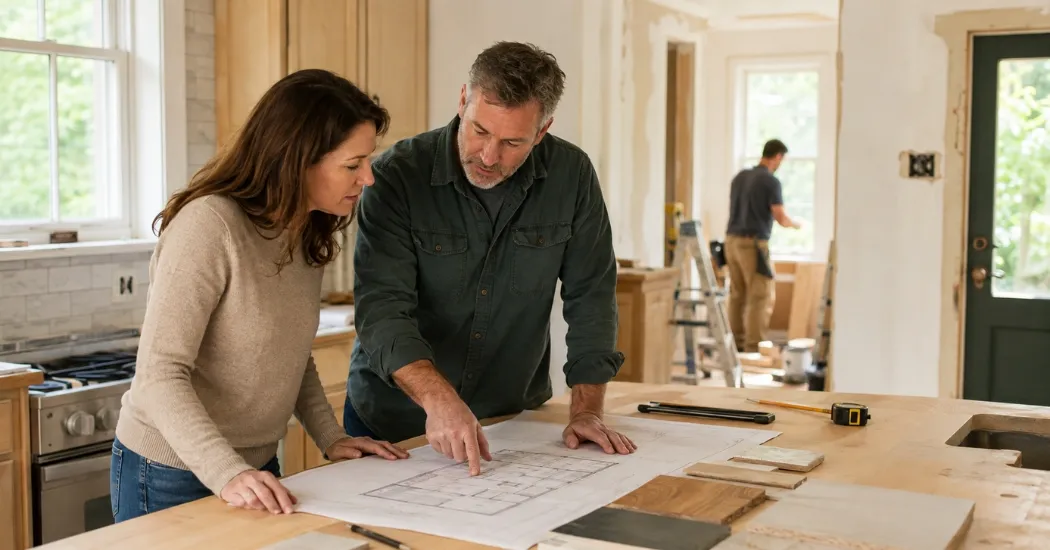
How to Choose a Remodeling Contractor: The Credential Checklist
This is the part everyone knows they’re supposed to do and almost nobody actually does — until something goes wrong and they wish they had.
Verify the License
In New York, any contractor performing home improvement work should carry the appropriate local licensing for the county they’re working in, and should be able to produce that license number without hesitation. If a contractor gets vague or changes the subject when you ask, that’s your answer. A licensed and insured remodeling contractor isn’t showing off by mentioning it; they’re giving you the baseline protection every renovation deserves.
Confirm the Insurance — Then Ask for It in Writing
Ask specifically for general liability insurance and workers’ compensation coverage. Not yes, we’re insured over the phone, but an actual certificate, with your name and address on it if possible. Here’s the blunt version of why this matters: if an uninsured worker gets hurt on your property, you could be the one holding the bill. Insurance isn’t paperwork theater. It’s the wall between ” an unfortunate accident” and your homeowner’s insurance premium doubles.
Check for Real Local Experience
A contractor who mostly works in downtown apartment towers may be excellent at their job and still be the wrong fit for your 1920s farmhouse in Kent with a fieldstone foundation. Homes in Westchester and Putnam County come with their own quirks, older wiring, well systems, septic considerations, and building departments that know the housing stock better than any outsider will. Ask how many projects the contractor has completed specifically in your town, and ask to see a few.
Red Flags to Watch for When Choosing a Remodeling Contractor
Some warning signs are loud. Others are quiet enough that homeowners talk themselves out of noticing them, usually right before they become expensive.
Watch out for:
- Large upfront deposits. A reasonable deposit tied to materials is normal. Being asked for half the total project cost before a single wall comes down is not.
- Pressure to sign immediately. Reputable contractors want you to feel good about the decision, not rushed into it. If someone’s pushing you to sign tonight because the price won’t last, that price was probably never real to begin with.
- A bid that’s dramatically lower than everyone else’s. This is the renovation equivalent of a used car priced $8,000 below market; either something’s wrong with it, or something’s about to go wrong with you.
- No fixed address or physical presence. A legitimate local company has a real office, a real crew, and a real reputation they have to protect in a small community.
- Vague, one-page contracts. If the entire scope of a kitchen renovation fits on a napkin, that’s not efficiency; that’s a document designed to leave wiggle room later.
- Can’t produce references. Anyone who’s completed good work in the last two years should have at least three homeowners willing to vouch for them.
None of these red flags alone is necessarily a dealbreaker in isolation; people have off days, paperwork gets misplaced. But two or three together should have you politely ending the conversation and moving to the next name on your list.
The Bid Trap: Why the Lowest Price Rarely Wins
Every homeowner wants to save money. That instinct is smart, right up until it isn’t.
Here’s the quiet math nobody explains upfront: labor and proper materials cost roughly what they cost. A contractor who bids dramatically lower than three other quotes for the same scope of work isn’t just being generous. They’re usually planning to make up the difference somewhere: thinner materials, subcontractors paid off the books, or a wave of unexpected change orders once the walls are already open and you’re emotionally committed to finishing.
The smarter approach is to get three detailed, written estimates for the identical scope of work, then compare what’s actually included, not just the bottom-line number. A $32,000 bid that includes permits, cleanup, and specific named materials is a better deal than a $27,000 bid that quietly excludes all three.
Questions to Ask Before You Hire a Remodeling Contractor
Treat your first meeting less like an interview you’re taking and more like one you’re giving. A good contractor expects to be asked hard questions and generally enjoys answering them; it’s the ones who get defensive that you should worry about.
Bring this list:
- How many years have you been working in this area, specifically?
- Who will be my point of contact once the project starts?
- What’s your realistic timeline, and what could extend it?
- How do you handle unexpected issues found during demolition?
- What’s included in your written estimate, and what isn’t?
- What warranty do you offer on labor?
- Can I speak with three recent clients?
Pay attention not just to the answers, but to how comfortable the contractor is giving them. Confidence built on experience sounds very different from confidence built on hoping you won’t ask a follow-up question.
Understanding the Contract: What Should Be in Writing
If it isn’t written down, it isn’t real, not legally, and honestly not practically either, since memory has a funny way of shifting once a bill is due. A solid remodeling contract should spell out:
- The complete scope of work, room by room
- Specific materials and brands, not just quality tile
- A payment schedule tied to project milestones, not the calendar
- A realistic start and completion timeframe
- How change orders are priced and approved
- Warranty terms on labor and materials
- Cleanup and debris removal responsibilities
If your contractor hesitates to put any of this in writing, ask yourself why. People who plan to deliver on their promises rarely mind being held to them on paper.
What a Trustworthy Remodeling Process Actually Looks Like
The best renovations tend to follow a predictable rhythm, which sounds boring, and honestly, that’s the point. Drama is for reality television, not your bathroom.
A trustworthy remodeling process generally moves through four clear stages: a free, in-home consultation where the contractor actually listens before quoting a number; a detailed written estimate that reflects the real scope of the job; the construction phase itself, with regular updates instead of radio silence; and a final walkthrough where you check the work together before anyone calls it finished.
If a contractor skips the consultation and just texts you a number, or disappears for two weeks mid-project with no explanation, that’s not a “busy season” excuse. That’s how the process is supposed to feel, and it’s how it should feel every time, not just when things are going smoothly.
Local Matters: Why a Westchester or Putnam County Contractor Beats a Big-City Firm
There’s a reason so many homeowners in Stormville, Brewster, and Mahopac specifically look for a contractor based nearby instead of hiring a large firm that drives in from three counties away.
Local contractors show up faster when something needs a second look. They know which building departments in Westchester and Putnam County move quickly and which ones need extra lead time. They know that a quick septic inspection in one town can take two weeks longer in the next one over. And this matters more than people expect; their reputation lives in the same community you do. A contractor who does sloppy work in a town of 30,000 people finds out about it fast, usually from someone at the grocery store.
That local accountability is worth more than a glossy brochure from a company that’s never set foot in your zip code.
Warranty, Punch Lists, and What Happens After the Work Is Done
The renovation isn’t actually finished when the last coat of paint dries. It’s finished when you and the contractor walk through the space together, note anything that needs a final touch-up, a squeaky cabinet hinge, a paint line that needs cleaning up, and agree it’s done. That final list is often called a punch list, and it exists specifically so nothing gets forgotten in the excitement of finally being able to use your new kitchen.
Ask what warranty coverage applies once the crew packs up. A reputable home renovation company will stand behind their labor for a meaningful period, separate from whatever warranty came with the materials themselves. If a contractor can’t clearly explain what happens if something goes wrong six months later, that’s worth clarifying before you sign anything, not after.
How VPD Contracting Checks Every Box
VPD Contracting has spent close to three decades transforming homes across Westchester and Putnam County, working out of Stormville since 1997. That’s not a marketing line; it’s the kind of timeline that means the crew has likely already solved whatever quirky problem your 1960s ranch or century-old farmhouse is about to reveal.
The team is licensed and fully insured, with clear written estimates before any demolition begins and a single point of contact so you’re never chasing down answers. Whether it’s a kitchen remodel that finally works with how your family actually cooks, a bathroom renovation built to last decades instead of leak in three years, or a full home addition that needs the room without needing a move, the process runs through the same four stages every time: consultation, estimate, construction, and a final walkthrough where nothing gets signed off until it’s actually right.
You can see the results for yourself in past projects or read what past clients have said about the experience. And if a few more questions come to mind while you’re reading this, which, if you’ve made it this far, they probably have, the FAQ page covers most of what homeowners ask before their first consultation.
Final Thoughts: Choosing a Remodeling Contractor You Can Trust
Renovations are stressful enough without adding a contractor gamble on top of it. The homeowners who end up happy with the process almost always did the same handful of things: they checked licensing and insurance without just taking someone’s word for it, they got several detailed estimates instead of chasing the lowest number, they asked hard questions and paid attention to how those questions were answered, and they got everything in writing before a single tool touched their walls.
Do that groundwork, and how to choose a remodeling contractor stops being a source of anxiety and becomes what it should have been all along, a fairly straightforward decision that sets up everything else to go right. Your future self, standing in a finished kitchen that actually works the way you imagined it, will be glad you took the time.
Ready to start the conversation? Contact VPD Contracting for a free, no-pressure consultation, or call (845)-519-8487 to talk through your project with someone who’s heard just about every renovation story there is, including, hopefully, yours turning into one of the good ones.
Frequently Asked Questions
How long does it take to choose a remodeling contractor?
Plan for one to two weeks to research, interview, and compare at least three detailed estimates properly.
What's the biggest red flag when hiring a contractor?
Being asked for a large deposit before any work has actually started on your home.
How do I verify a contractor's license and insurance?
Ask directly for documentation and confirm details before signing anything or making payments.
What should a written estimate include?
Labor, materials, timeline, payment schedule, and clearly stated exclusions or allowances.
How many contractors should I get quotes from?
Three is typically enough to compare pricing, communication style, and professionalism fairly.